 DCnepal
Matatirtha Aunsi: Honoring Motherhood, Spiritual Continuity, and Intergenerational Wisdom” HAPPY MOTHER’S DAY
Mata Tirtha Aunsi—widely known as Matatirtha Aausi—is a deeply emotional and spiritual occasion in Nepal dedicated to honoring all mothers, whether living or departed. Observed on the new moon day of Baisakh, this sacred festival serves as a bridge between memory, gratitude, and reverence.
At the heart of this observance lies Matatirtha Temple, where thousands of devotees gather before dawn. Pilgrims visit the holy pond, believed to reveal the reflection of one’s deceased mother, symbolizing an eternal bond that transcends life and death. The atmosphere is filled with prayers, offerings, and quiet tears—each expression a testament to the enduring love for mothers. The site, often called Matatirtha, becomes a sanctuary of remembrance and healing.
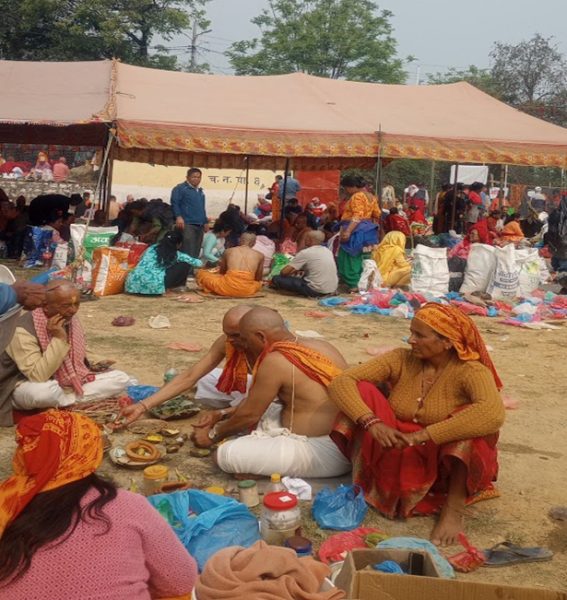
This day is not only about ritual but also about recognizing the profound “mother power”—a force rooted in unconditional love, resilience, and wisdom. Mothers embody patience, sacrifice, and strength, nurturing not only families but also shaping societies and humanity at large. Their guidance becomes a moral compass, their care a foundation for growth, and their blessings a source of lifelong protection.
For those whose mothers are living, the day is marked with gifts, respect, and heartfelt appreciation. For those whose mothers have passed on, Matatirtha Aausi offers a sacred space to reconnect spiritually, to express gratitude, and to seek blessings from beyond.
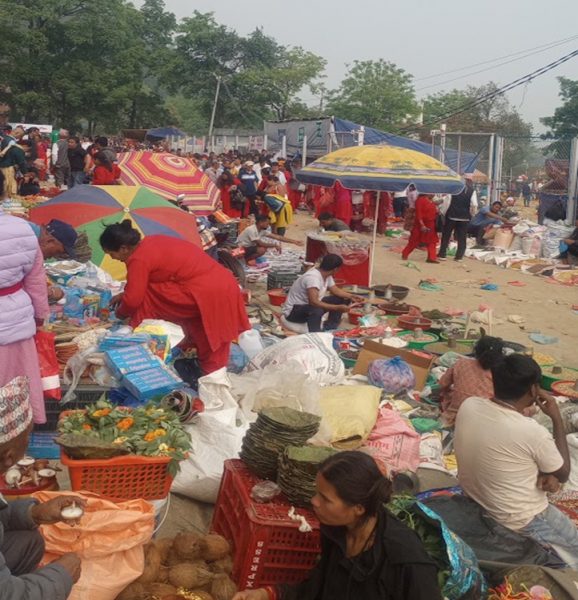
Ultimately, this festival is a reminder that the essence of motherhood is universal and timeless. It celebrates not only biological mothers but also all who nurture, guide, and protect. In honoring mothers, we honor life itself—the source of compassion, continuity, and hope for a harmonious world.
Mata Tirtha Aunsi, or Matatirtha Aausi, is not only a cultural observance but also a deeply philosophical expression rooted in the ancient wisdom of the Vedas, Puranas, and Upanishads. These sacred texts elevate the status of the mother to the highest realm of reverence. The well-known Vedic injunction “Matru Devo Bhava” (Mother is God) from the Taittiriya Upanishad reflects the profound understanding that the mother is the first teacher, nurturer, and embodiment of divine energy.
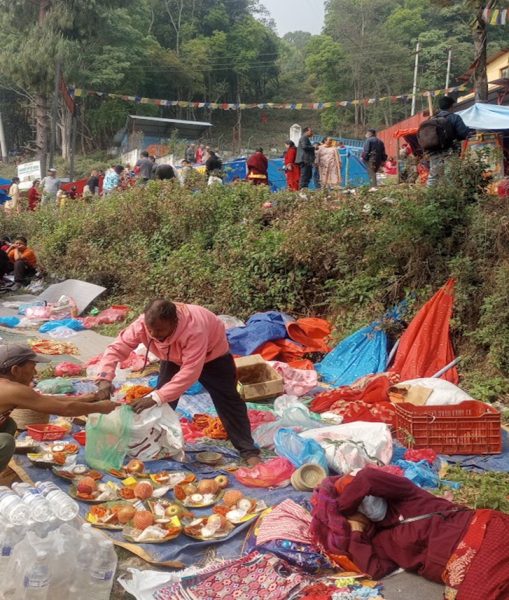
At Matatirtha Temple in Chandragiri, devotees gather not only to perform rituals but to reconnect with a timeless continuum of existence. The sacred pond of Matatirtha symbolizes the bridge between the physical and spiritual worlds, where the past (ancestral memory), present (living gratitude), and future (continuity of values) converge.
The Garuda Purana emphasizes the importance of honoring ancestors, especially parents, as a duty (dharma) that sustains cosmic balance. Similarly, the Devi Bhagavata Purana glorifies the feminine divine (Shakti), portraying the mother as the ultimate source of creation, strength, and wisdom. In these texts, the “mother power” is not merely biological—it is cosmic, representing creation, preservation, and compassion.
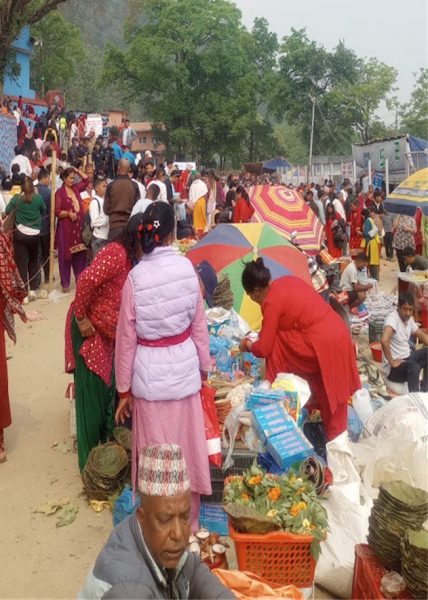
The Chandogya Upanishad and Brihadaranyaka Upanishad further highlight the idea that knowledge and identity are transmitted through relationships, with the mother playing a central role in shaping consciousness and ethical grounding.
Matatirtha Aausi, therefore, becomes a living philosophy. It teaches that honoring mothers connects us to our roots (past), grounds us in gratitude and responsibility (present), and inspires us to carry forward values of compassion, care, and wisdom (future). Through this sacred observance, individuals reaffirm that the blessings of mothers—whether living or in heaven—continue to guide humanity toward harmony, resilience, and a more compassionate world.
Very, very Happy Mother’s Day.
Brief Biography of Prof. Medani P. Bhandari, PhD
Prof. Medani P. Bhandari is an internationally recognized environmentalist, humanitarian, and scholar with over 4 decades of experience in environmental conservation, sustainable development, and social transformation. He has worked across Asia, the Middle East, Africa, and North America, contributing to global dialogues on climate change, biodiversity conservation, and equity. With over 100 scientific publications and around 40 books, his work bridges science, policy, and practice, emphasizing knowledge as a tool for social justice and planetary well-being.
Currently, Prof. Bhandari serves as the Principal of Kathmandu Forestry College (KAFCOL), a leading academic institution dedicated to forestry and natural resource management education in Nepal. Under his leadership, the college has strengthened its mission to address the Triple Planetary Crisis—climate change, biodiversity loss, and pollution—through interdisciplinary education and practical engagement.
KAFCOL offers programs including Diploma in Forestry, Bachelor of Science in Forestry (B.Sc. Forestry), and Master’s in Natural Resource Management–Rural Development (MSc NRM-RD). The institution is widely recognized for producing skilled graduates equipped with both scientific expertise and a strong sense of social responsibility. Beyond technical knowledge, the college nurtures values of compassion, resilience, and humanitarian service, preparing students to face real-world challenges and live meaningfully even in difficult circumstances.
Located near the sacred Matatirtha Temple, KAFCOL provides a peaceful and inspiring academic environment within the Kathmandu Valley. The college warmly welcomes students to its Diploma in Forestry program, B.Sc. Forestry and M.Sc. NRM-RD offers not just education but a transformative journey toward becoming responsible global citizens committed to sustainability and humanity.
The post Matatirtha Aunsi: Honoring Motherhood, Spiritual Continuity, and Intergenerational Wisdom” HAPPY MOTHER’S DAY appeared first on DCnepal.